
Maths tips for Class 10 students: how to actually score high in board exams (2026)
Class 10 maths is a skill, not a subject you can cram. These practical tips cover what actually works - from NCERT strategy to exam-day time management.
EXAM PREPARATIONCLASS X
5/24/20265 min read
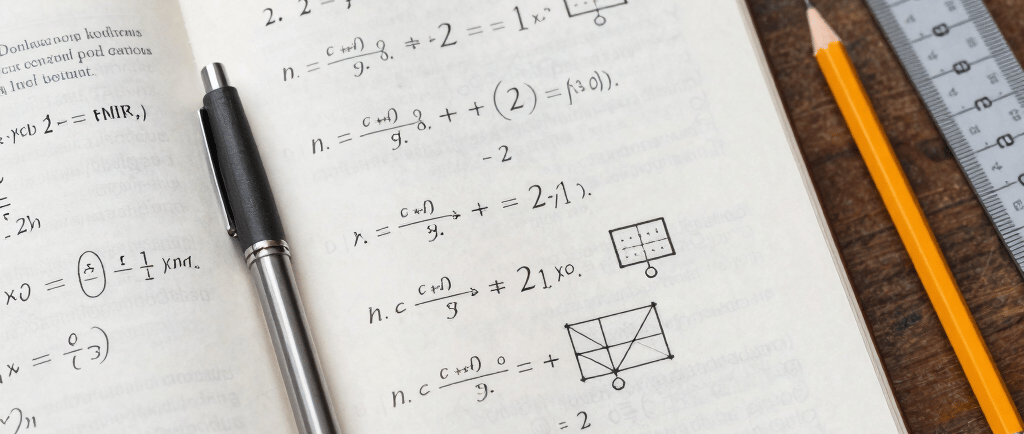
Most Class 10 students treat maths as a subject to be studied. Students who score 90+ treat it as a skill to be practiced. That distinction explains most of the gap between average and high performers on board exam day.
This guide covers what actually works - specific strategies backed by research and student community experience, not general advice about "working harder." From which NCERT chapters deserve the most time to how to write answers for maximum partial marks, these are the moves that show up repeatedly when students and teachers explain what made the difference.
Understand the exam before studying for it
The CBSE Class 10 maths paper is 80 marks of theory plus 20 marks of internal assessment. The theory paper has around 38-40 questions across four types: 1-mark MCQs, 1-2 mark very short answers, 3-mark short answers, and 4-5 mark long answers.
Knowing this before you open your textbook changes how you study. A 4-mark question needs a different preparation depth than a 1-mark MCQ - you can't treat them the same.
Spend one hour reading the official CBSE marking scheme for the last two years of papers. It tells you not just what's asked, but how marks are awarded - which is the real game.
Know which chapters are worth the most marks
Not all chapters carry equal weight. These five areas together account for 40-50 marks on a typical paper:
Triangles (10-12 marks): Similarity, Pythagoras theorem, constructions
Surface Areas and Volumes (10 marks): Spheres, cylinders, cones, frustums
Circles (8-10 marks): Tangent properties, angle theorems
Quadratic and Linear Equations (8-10 marks): Both algebraic and graphical methods
Arithmetic Progressions (8-10 marks): nth term, sum formulas
Allocate roughly 60% of your study time to these five chapters. Real Numbers, Statistics, and Probability are comparatively easier and shorter - handle them efficiently, but don't let them eat into the time these heavier chapters need.
Start with NCERT, not reference books
The most consistent advice from students who score 90+ in CBSE boards: NCERT first, then previous year questions, with reference books as a distant third.
NCERT exercises are not warm-up material. They are the foundation. Board examiners set papers with NCERT as the primary source - a student who has genuinely mastered every NCERT exercise in a chapter is already well-prepared for that chapter on the paper. The mistake many students make is to skim NCERT and jump to RD Sharma for "harder problems," only to discover their NCERT base has gaps that show up in the exam.
Once NCERT exercises are solid, supplement with last five years of previous year question papers. The combination is what student communities on CBSE call the "winning formula."
Write every step - partial marks are real
One of the most consistent findings from board exam marking analysis: students lose a significant share of marks not because they don't know the answer, but because they don't show the working.
CBSE board marking awards marks for process, not just the final answer. A student who writes a wrong final answer but shows correct intermediate steps can earn 50-70% of the marks for that question. A student who writes only the answer - even if it's correct - risks getting zero if the answer looks like a guess.
Build this habit during practice. If you skip steps while solving at home, you will skip steps in the exam. The habit forms before the exam hall, not inside it.
Understand concepts - don't just memorize formulas
There is a test for whether you truly understand something: can you explain it to someone who knows nothing about the subject?
Take the distance formula: √((x₂-x₁)² + (y₂-y₁)²). A student who has only memorized it will blank out if they forget it under pressure. A student who understands that it comes directly from the Pythagoras theorem applied to a coordinate system can reconstruct it from scratch. That student is exam-proof on that topic.
This matters most in three areas:
Trigonometry - sin, cos, and tan are ratios, not magic numbers. If you understand why sin 30° = 0.5 (the relationship between the opposite side and hypotenuse in a 30-60-90 triangle), you don't need to memorize the table - you reconstruct it. The standard trigonometry table for 0°, 30°, 45°, 60°, and 90° is derivable from first principles.
Algebra - the quadratic formula exists because it's derived by completing the square. Understanding the derivation means the formula is unforgettable.
Geometry - similarity theorems make sense spatially. If you can draw why the Basic Proportionality Theorem holds, you won't confuse it with the angle bisector.
Keep a formula notebook and revise it daily
Students who revise formulas daily in the month before boards consistently outperform those who don't. The mechanism is simple: daily exposure moves information from short-term to long-term memory. Reviewing formulas once the night before an exam does the opposite.
Set up a notebook organized by chapter. For each formula:
Write it out clearly
Add a one-line note on when to use it
Include one example application
Subject-specific strategies
The approach that works for algebra is not the same one that works for trigonometry. Here's what research and student communities recommend for each area:
Algebra - Polynomials, Linear & Quadratic Equations, AP - Understand formula derivations. Connect chapters - polynomials feed into quadratic equations. Practice multiple question types per chapter.
Geometry - Triangles, Circles, Constructions - Know all theorems by heart and why they hold. Practice drawing and labeling diagrams. Constructions are easy marks if practiced - skip them and you leave guaranteed points on the table.
Trigonometry - Trigonometric Ratios, Applications - Memorize the values table for 0°, 30°, 45°, 60°, 90° until recall is automatic. Height-and-distance problems follow a pattern - practice enough to recognize it quickly.
Data handling - Coordinate Geometry, Statistics, Probability - Draw graphs accurately and to scale. Statistics and Probability offer some of the easiest marks on the paper if you practice the formula applications.
Manage your time in the exam
The maths paper is three hours for roughly 38-40 questions. Running out of time is more common than running out of knowledge - students who practice at home without time pressure often discover this the hard way.
If you want expert-guided maths preparation alongside what you're doing on your own, reach out directly via sasinstitute.in or on WhatsApp at +91 77990 98666.
SAS Institute
SAS Institute in Malakpet, Hyderabad offers dedicated maths coaching for CBSE, ICSE, and SSC boards, with the same concept-based teaching approach this guide advocates - understanding over memorization, step-by-step working, regular practice tests. Small batch sizes mean teachers can spot and fix individual weak areas rather than moving the whole class at a generic pace.
Frequently Asked Questions
How many hours should I study maths every day for Class 10 boards?
One to two focused hours of daily maths practice is more effective than marathon sessions on weekends. The key is consistency - maths is a skill that builds through repeated exposure to problems, not through volume alone. Pair daily practice with the right guidance and you'll notice improvement within weeks.
Should I focus on NCERT or reference books like RD Sharma for Class 10 maths?
NCERT first, always. The majority of CBSE board questions - especially conceptual and application-based ones - are drawn directly from NCERT exercises. Master NCERT completely before opening RD Sharma or any other reference book. Once your NCERT base is solid, supplement with previous year question papers rather than more exercises from a third book.
What are the highest-scoring chapters in Class 10 maths?
Triangles, Surface Areas and Volumes, Circles, Quadratic Equations, and Arithmetic Progressions together account for roughly 40-50 marks on a typical CBSE paper. Allocate 60% of your study time to these five chapters - they give the best return per hour of preparation. Real Numbers, Statistics, and Probability are comparatively easier and worth covering for quick marks.
I understand concepts but keep making mistakes in the exam. What should I do?
This is the most common pattern among Class 10 students. Understanding and applying under exam pressure are different skills. The fix is to practice under exam conditions: set a timer, attempt full papers without stopping, and categorize each error afterward - conceptual gap, calculation slip, or running out of time. Each type has a different remedy. Coaching with expert feedback accelerates this process significantly.
How do I stop forgetting maths formulas before the exam?
Keep a dedicated formula notebook organized by chapter, with each formula written out alongside a one-line note on when to use it. Revise this notebook for 10-15 minutes every day in the month before exams. The daily exposure cements formulas in long-term memory far more reliably than reading them once before the test. For trigonometric ratios and AP/GP formulas specifically, consider making flashcards.