
Tips for Revision - Part 2 of 9 - The 30–90 Minute Daily Revision Blueprint
You don’t need to study all day to score better. A focused 30–90 minute daily revision routine can improve memory, reduce stress, and make exam preparation much easier.
EXAM PREPARATIONCLASS X
5/26/20268 min read
Introduction to the Revision Blueprint
In the context of academic success, establishing a structured daily revision plan is paramount. This revision blueprint is designed to cater to students who find themselves at different life stages, balancing various commitments and responsibilities. The overarching aim of this framework is to provide a flexible yet effective approach to studying that can be tailored to individual schedules, ensuring that students can prioritize their education without compromising other aspects of their lives.
The importance of regular study habits cannot be overstated. Engaging in consistent revision not only aids in the retention of information but also fosters a deeper understanding of subjects being studied. By developing a reliable routine, students can enhance their learning outcomes, which is essential in today’s competitive educational landscape. The daily revision blueprint encourages students to set aside dedicated time for study, thus promoting an organized method for absorbing curriculum material.
This structured approach recognizes that every student has unique needs and commitments. Whether someone is balancing work, family obligations, or extracurricular activities, the revision blueprint can accommodate these variables. By implementing a consistent yet adaptable study plan, students are equipped to manage their time efficiently, enabling them to allocate approximately 30 to 90 minutes each day toward their educational pursuits.
Furthermore, this blueprint emphasizes the significance of setting achievable goals during study sessions. By breaking down material into manageable sections and regularly reviewing content, students can build on their knowledge incrementally. Ultimately, the revision blueprint serves as a guide to establishing effective study habits that will yield long-term benefits, enhancing not only academic performance but overall confidence in one’s abilities.
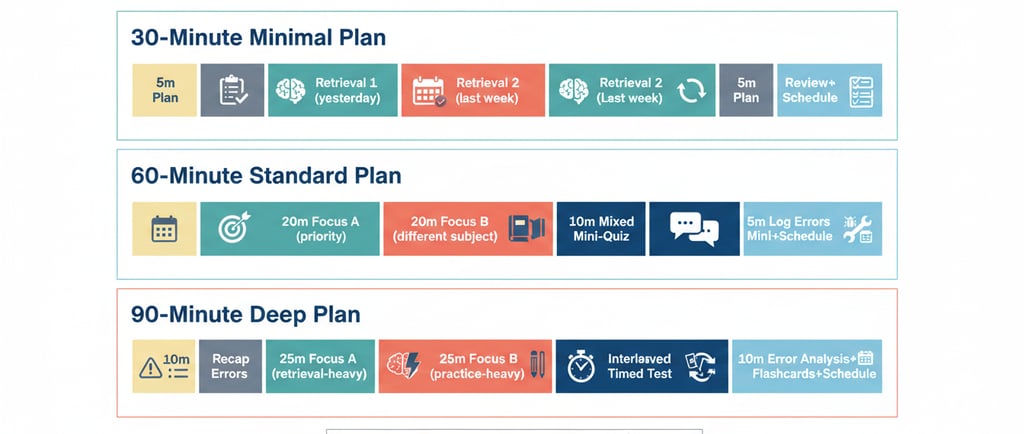
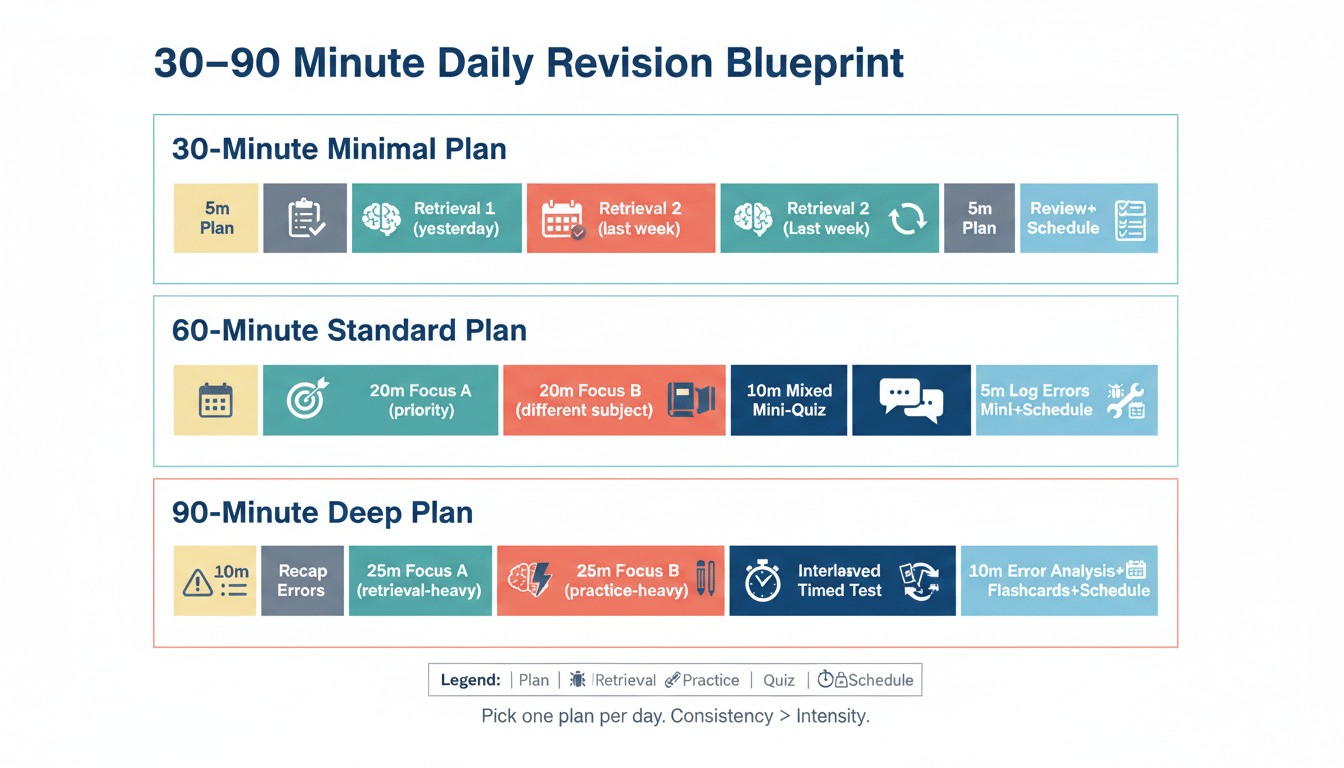
The 30-Minute Minimal Plan: A Busy Day Fallback
The 30-minute revision plan is designed specifically for students who find themselves navigating tightly packed schedules yet still wish to engage in effective study practices. This minimal plan consists of strategically segmented components, each tailored to maximize learning in a limited timeframe. While time constraints may pose challenges, this approach harnesses the power of structured study sessions to enhance retention and comprehension.
To begin, quick scans of study materials should be the initial focus. This involves a rapid review of key concepts, notes, or flashcards. Aim for a duration of about 10 minutes to skim through relevant topics, ensuring that important information is refreshed in your memory. This segment gives students the ability to reorient themselves with previously learned material, acting as a primer for the more engaging tasks that follow.
The next component consists of retrieval exercises, which are crucial in reinforcing memory retention. Dedicate approximately 15 minutes to self-testing methods, such as answering practice questions or utilizing apps with flashcards. This active recall practice not only solidifies understanding but also highlights areas requiring further attention. The brain's retrieval processes are powerful for long-term learning, making this step especially beneficial even when time is limited.
Finally, wrap up the session with a brief planning phase, utilizing the remaining 5 minutes. Take this time to outline your targets for the next study session. Effective planning reduces cognitive load and ensures that learning remains focused and progressive. By breaking down revisions into a structured 30-minute framework, students can integrate learning into their daily routines, making even the busiest days beneficial for academic success.
The 60-Minute Standard Plan: Ideal for Most Students
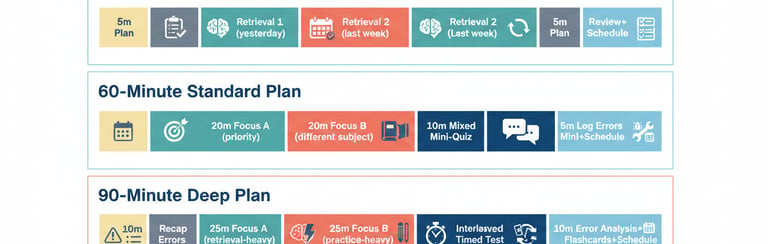
The 60-minute standard study plan is designed to cater to the needs of the average student who possesses a relatively flexible schedule. This plan emphasizes structured yet adaptable learning phases, aimed at maximizing comprehension and retention of material. The initial step in the 60-minute framework involves a brief planning session, which sets realistic goals and objectives for the study period. During this phase, students assess the material they need to cover and prioritize tasks based on their upcoming academic requirements.
Following the planning session, a five-minute warm-up occurs. This warm-up can consist of reviewing previously studied content or engaging with related topics to rejuvenate the mind. Such an approach prepares students mentally for the focused blocks that follow, facilitating better retention and understanding of new concepts.
The core of the 60-minute standard plan involves two focused 20-minute blocks of study, where students delve deep into the subject matter. During these intervals, it is crucial to maintain a distraction-free environment. Students should employ active learning techniques such as summarizing information, teaching concepts aloud to themselves, or utilizing visual aids to enhance engagement. The active learning component is vital to ensure that concepts are not only memorized but understood within a broader context.
Following the concentrated study blocks, a 15-minute mixed quiz session is integrated. This allows students to assess their understanding of the material covered, reinforcing knowledge through immediate application. By mixing questions from different topics, learners can foster connections between concepts and enhance their critical thinking abilities. Overall, the 60-minute standard plan is designed not only for effective learning but also for adaptability to each student’s specific educational journey.
The 90-Minute Deep Plan: For Serious Exam Preparation
As students approach exam periods, the necessity for robust study strategies become paramount. One effective approach is the 90-minute deep revision plan, designed to optimize focus and retention during intensive study sessions. This plan consists of three critical components: detailed focus blocks, interleaved testing, and error analysis, all of which contribute significantly to the mastery of academic content.
The cornerstone of the 90-minute deep revision plan is the establishment of detailed focus blocks. These segments involve studying specific subjects or topics for concentrated periods, allowing for immersive and uninterrupted focus. When students engage in such blocks of study, they minimize distractions and can delve deeper into complex material. It is advisable to structure these blocks to tackle challenging subjects first, as cognitive performance tends to be at its peak during the initial phase of study sessions.
Interleaved testing serves as a complementary method within this plan. By alternating between different subjects or topics, students develop the ability to adaptively retrieve information, enhancing their problem-solving skills. This technique not only reinforces learning but also prepares them for the varied question formats encountered in exams. Rather than relying on memorization alone, interleaved testing encourages a deeper understanding of the interconnectedness between concepts.
Finally, error analysis is an essential part of the deep revision plan. After practice tests or quizzes, students should spend time reviewing mistakes to understand the root causes. This reflective practice allows them to identify any gaps in knowledge, thus focusing their efforts on areas requiring improvement. By regularly incorporating error analysis into their study routine, students can significantly enhance their grasp of the material.
In summary, the 90-minute deep revision plan is a highly effective study strategy for students in preparation for exams. By implementing detailed focus blocks, interleaved testing, and error analysis, students can cultivate a comprehensive understanding of their subjects while minimizing the stress associated with last-minute cramming.
Adapting the Plans to Fit Your Needs
The process of learning and revision is highly individualistic, reflecting the diverse landscapes of personal commitments, learning styles, and cognitive capacities. Therefore, it is essential to adapt the suggested study plans to better align with your unique circumstances. Students, professionals, or lifelong learners should feel empowered to modify the recommended durations and components of their revision schedule in ways that complement their lifestyles.
To incorporate flexibility into your daily routine, begin by assessing your current commitments and available time slots. Consider dividing your study periods into manageable segments, such as 30, 45, or even 60 minutes, depending on your focus and stamina levels. Additionally, understand that the intensity of your study can affect productivity; shorter, focused sessions might yield better outcomes than prolonged, less engaging ones.
Moreover, factor in your learning preferences. Some individuals benefit from auditory or visual stimuli, while others might excel through hands-on practice or discussion-based learning. Experiment with various approaches and identify what methods resonate best with you. Adapting study plans by incorporating a mix of varied formats, such as flashcards, online quizzes, and group sessions, can enhance understanding and retention of information.
In harnessing the power of adaptability, be mindful of potential burnout. It is crucial to allocate time for breaks and leisure activities, allowing your brain to recuperate. Scheduling regular reflective periods where you assess the effectiveness of your revision strategies can help fine-tune your approach, ensuring longevity in your study endeavors. By prioritizing adaptability in your daily study routine, you position yourself for sustained motivation and improved academic performance.
Quick Strategies for Tight Days: The 5–5–5 Micro Plan
In today's fast-paced world, finding adequate time for study can often become a daunting challenge. Acknowledging this, the 5–5–5 Micro Plan serves as a pragmatic solution for individuals with tight schedules. This approach encourages consistent study habits, ensuring that learning continues even amidst life’s demands.
The 5–5–5 Micro Plan is simple yet effective: dedicate five minutes to reviewing material, followed by another five minutes of writing or summarizing what you've learned, and conclude with five minutes of self-quizzing. This method not only enhances retention but also aids in solidifying knowledge through active engagement. By breaking down study topics into manageable portions, this approach mitigates the overwhelming nature of lengthy study sessions.
Implementing this micro plan requires only fifteen minutes, making it suitable for even the busiest of days. For instance, during a lunch break or between appointments, you can utilize this short timeframe to engage in focused learning. Additionally, the compact nature of the sessions fosters a stepping stone for longer study periods on days when time is more abundant.
It's important to maintain a mental note of the specific subjects or topics you wish to cover within each segment. This pre-planning will ensure that your time is spent efficiently and effectively. Regularly utilizing the 5–5–5 Micro Plan aids in building a study habit that reinforces discipline over time, making it easier to adjust to more intensive study routines when your schedule allows.
By adopting the 5–5–5 Micro Plan, you can ensure that progress is made in your studies even on days when time is constrained, preserving momentum and supporting long-term learning goals.
Conclusion: Making Your Revision Strategy Work for You
In the quest for academic success, it is imperative that students recognize the importance of tailoring their revision strategies to align with their unique life circumstances and educational requirements. Each student possesses distinct challenges and responsibilities, which can significantly impact their ability to engage with study material effectively. Thus, the first step is to introspectively assess one's own lifestyle, commitments, and learning preferences to craft an approach that encapsulates both efficiency and flexibility.
The various plans discussed, ranging from the intensive 90-minute revision block to the more manageable 30-minute sessions, provide a spectrum of options that can be customized to fit individual needs. For instance, students who juggle part-time work or familial responsibilities may gravitate towards shorter, more frequent study intervals that allow for quick content reviews without overwhelming their schedules. Conversely, those who might find longer sessions more effective can adopt the 90-minute structure, leveraging deeper focus to retain complex subjects.
Moreover, staying motivated and committed to a chosen pattern is crucial. Frequent assessments of progress and periodic adjustments to the revision plan can bolster this commitment, ensuring that students remain engaged and responsive to their evolving academic landscape. It is not merely about the number of hours spent revising, but the quality of engagement during those hours that truly matters. Implementing techniques such as active recall, spaced repetition, and mindful breaks can enhance the effectiveness of whichever plan you choose.
Ultimately, each student has the potential to cultivate a revision strategy that not only complements their study needs but also enhances their academic journey. By remaining adaptable and focused, students can harness their time wisely and foster an environment conducive to learning and achievement.
If you need help, reach out directly on WhatsApp at +91 77990 98666.
SAS Institute
SAS Institute in Malakpet, Hyderabad offers dedicated maths coaching for CBSE, ICSE, and SSC boards, with the same concept-based teaching approach this guide advocates - understanding over memorization, step-by-step working, regular practice tests. Small batch sizes mean teachers can spot and fix individual weak areas rather than moving the whole class at a generic pace.